
How Generative UI Is Changing Product Design Forever
How Generative UI Is Changing Product Design Forever explores how AI-driven interfaces are reshaping digital experiences and workflows
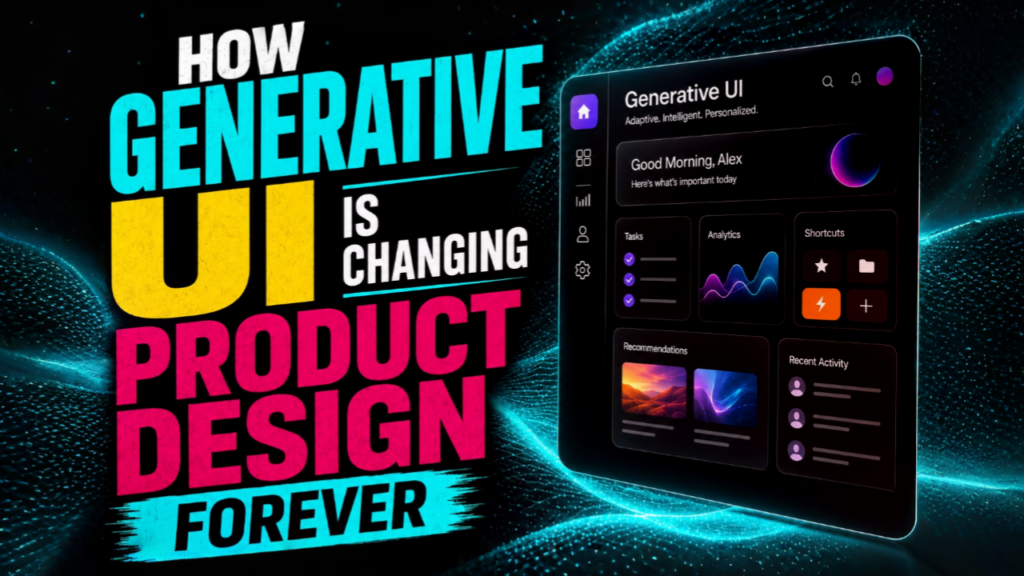
How Generative UI Is Changing Product Design Forever is becoming one of the most important discussions in the modern technology industry. Artificial intelligence is no longer limited to automating backend systems or generating text responses. It is now transforming the very structure of user interfaces, digital products, and interactive experiences. Businesses, creators, and entrepreneurs using platforms to buy YouTube channel assets or planning to sell your YouTube channel businesses are beginning to understand how adaptive interfaces powered through vilyz.com can fundamentally change digital engagement and online growth.
For decades, product design followed relatively fixed structures. Designers created static layouts, navigation systems, menus, and workflows intended to serve broad audiences. While personalization existed through recommendations or themes, interfaces themselves remained mostly predefined.
Generative UI introduces a completely different concept. Instead of fixed interfaces, AI systems dynamically generate user experiences in real time based on context, behavior, goals, and preferences. This changes the relationship between users and software because interfaces become adaptive rather than static.
The rise of generative interfaces is reshaping product design, software development, customer experiences, and digital business strategies globally. Companies are now exploring how AI-generated experiences can improve usability, engagement, and operational efficiency at unprecedented levels.
The Shift From Static Interfaces to Adaptive Experiences
Traditional product design depends heavily on assumptions about user behavior. Designers create layouts based on expected interactions and optimize experiences through testing and analytics. While this approach improved usability over time, it still relied on generalized patterns.
Generative UI changes this model entirely by enabling interfaces to evolve dynamically for individual users. Instead of showing the same interface to everyone, AI systems can reorganize layouts, prioritize information, adjust workflows, and personalize interactions instantly.
For example, a productivity platform could display entirely different dashboards depending on whether the user focuses on analytics, communication, scheduling, or creative tasks. An e-commerce interface might reorganize itself automatically based on browsing behavior, purchasing history, and engagement patterns.
This level of adaptability creates more intuitive experiences because interfaces align directly with user intentions instead of forcing users to navigate rigid structures.
The transformation is especially relevant in creator ecosystems. Entrepreneurs evaluating a YouTube channel for sale increasingly recognize how AI-driven interfaces can improve audience engagement, analytics visibility, and operational efficiency.
Why Businesses Are Investing in Generative UI
Businesses are investing heavily in generative interfaces because user expectations continue evolving rapidly. Modern consumers demand faster, simpler, and more personalized digital experiences.
Static applications often create friction because users must learn navigation systems and adapt to predefined workflows. Generative UI reduces this friction by adapting software around user behavior rather than forcing users to adapt to software structures.
Another major advantage involves scalability. Traditional product design requires teams to manually create multiple interface variations for different audiences, devices, or use cases. AI-generated systems can automate much of this personalization dynamically.
Efficiency also matters from a business perspective. Adaptive interfaces improve engagement because users access relevant information faster. Better experiences increase retention, conversions, and customer satisfaction.
Generative systems additionally allow continuous optimization. AI interfaces learn from interactions over time, improving layouts and workflows automatically based on performance data.
This trend is influencing digital entrepreneurship as well. Creators who buy monetized YouTube channel businesses increasingly prioritize automation systems and AI-enhanced dashboards capable of simplifying workflow management and performance optimization.
How Generative UI Changes Product Design Workflows
The emergence of AI-generated interfaces is transforming the role of product designers themselves. Instead of designing every interface element manually, designers increasingly focus on creating systems, rules, behaviors, and interaction frameworks that AI can use dynamically.
This represents a shift from designing fixed screens toward designing adaptive ecosystems.
Designers must now think about context awareness, behavioral prediction, personalization logic, and AI interaction patterns. Collaboration between designers, developers, and machine learning engineers is becoming far more important.
Rapid prototyping is another area experiencing major changes. Generative systems can create interface variations automatically, allowing teams to test ideas much faster than traditional design cycles.
AI-assisted tools also help designers generate layouts, organize information architecture, and optimize user flows. Rather than replacing designers entirely, these systems augment creativity and accelerate production workflows.
However, this evolution also introduces new challenges. Designers must ensure adaptive interfaces remain intuitive and consistent despite dynamic changes. Excessive personalization can sometimes confuse users if interfaces become unpredictable.
Still, despite these concerns, generative systems are rapidly becoming central to modern product development strategies.
The Role of AI in Personalized Interfaces
Artificial intelligence powers generative UI through continuous analysis of user behavior, contextual signals, and operational data. Machine learning systems identify patterns, predict intentions, and adjust interfaces dynamically in response.
For example, AI can detect which features users access most frequently and reorganize interfaces to prioritize those tools automatically. Systems may also simplify layouts for beginners while exposing advanced functionality for experienced users.
Voice interfaces, conversational systems, and multimodal interactions are becoming increasingly important within this ecosystem. Users may eventually interact with software primarily through natural language instead of navigating traditional menus and buttons.
This transition could fundamentally change how digital products are built. Applications may evolve from fixed software platforms into intelligent environments capable of adapting continuously around user needs.
The creator economy is already experiencing early versions of this transformation. Entrepreneurs searching for a monetized YouTube channel for sale increasingly value AI-powered dashboards and automation systems because adaptive interfaces improve productivity and audience management.
Generative UI and the Future of User Experience
The future of user experience design will likely revolve around intelligent adaptability rather than static optimization. Interfaces may become increasingly invisible as AI systems handle operational complexity automatically behind the scenes.
Instead of navigating applications manually, users may simply communicate goals while generative systems organize workflows dynamically. This could dramatically reduce friction across digital environments.
For businesses, this creates opportunities to improve accessibility and usability significantly. Adaptive systems can tailor interfaces for different languages, disabilities, devices, and user preferences automatically.
E-commerce experiences may become highly individualized, with layouts, product recommendations, and purchasing workflows generated uniquely for each customer. Enterprise software could adapt to employee roles and responsibilities dynamically in real time.
Entertainment platforms may also evolve substantially. Recommendation systems could generate entirely personalized viewing environments and interactive experiences based on audience behaviour.
This evolution is particularly relevant for online creators. Investors exploring the best platform to buy YouTube channel opportunities increasingly recognize how adaptive analytics systems and AI-driven workflows contribute to long-term scalability.
Challenges and Ethical Concerns
Despite its advantages, generative UI introduces important challenges and ethical questions. One concern involves predictability. Users often rely on familiar interface patterns to navigate software efficiently. Excessive adaptation may create confusion if systems change too frequently.
Privacy is another major issue. Generative interfaces depend heavily on user data to personalize experiences effectively. Businesses must ensure transparent data practices and strong security protections.
Bias in AI systems also presents risks. Poorly trained models could unintentionally prioritize certain behaviours or preferences unfairly, creating inconsistent experiences across users.
Another challenge involves design consistency. Brands rely on recognizable visual identities and user experiences. Generative systems must balance personalization with maintaining coherent brand aesthetics and usability standards.
Technical complexity also remains significant. Building adaptive systems capable of generating reliable interfaces dynamically requires advanced AI infrastructure, behavioral analytics, and continuous optimization.
However, despite these challenges, the long-term momentum behind generative interfaces continues accelerating because businesses increasingly prioritize personalized digital experiences.
How Generative UI Could Reshape Digital Products
The long-term impact of generative UI may extend far beyond traditional applications. Entire operating systems, productivity tools, and online services could eventually function as AI-generated environments rather than fixed platforms.
This shift may reduce dependence on rigid app ecosystems entirely. Instead of downloading separate applications for different tasks, users may interact with unified intelligent systems capable of generating interfaces dynamically based on goals and context.
Software development itself could become more modular. Developers may focus on backend capabilities while AI systems generate front-end experiences automatically for different user types.
The rise of AI-generated interfaces could also accelerate no-code and low-code development ecosystems. Businesses may create highly customized software experiences without requiring extensive manual design work.
For digital entrepreneurs, these changes create new competitive opportunities. Automation, adaptability, and personalization are becoming increasingly important for audience growth and operational efficiency.
Businesses operating through viLyz and similar digital ecosystems are beginning to recognize how intelligent interface systems can improve engagement, scalability, and long-term business value.
Conclusion
Artificial intelligence is transforming product design from static interface creation into dynamic experience generation. Generative UI represents a fundamental shift in how humans interact with software because interfaces can now adapt continuously based on user behavior, goals, and preferences.
This evolution is reshaping industries ranging from e-commerce and enterprise software to entertainment and content creation. Businesses adopting adaptive systems gain advantages in engagement, usability, scalability, and personalization.
The creator economy is evolving alongside these changes as well. Entrepreneurs seeking to buy YouTube channel assets or planning to sell your YouTube channel businesses are increasingly recognizing how intelligent interface systems improve operational efficiency through vilyz.com. As creators continue combining adaptive workflows with analytics from https://studio.youtube.com/, generative UI will likely become one of the defining forces shaping the future of digital products and user experiences.