
AI Agents vs SaaS: Why Autonomous Workflows Are Replacing Traditional Software
Ai agents vs saas is reshaping digital work as autonomous AI workflows replace traditional software for faster business automation
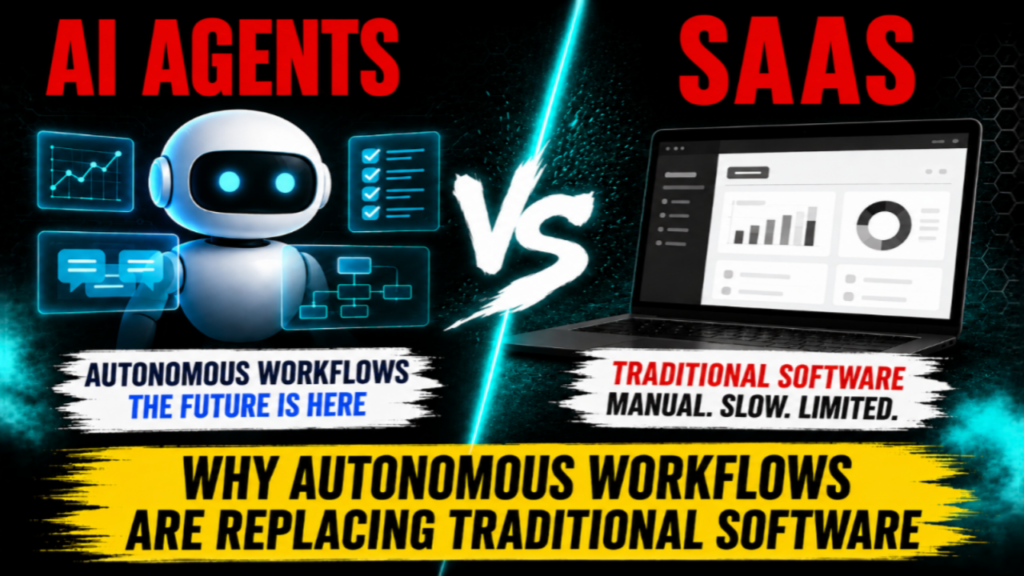
Ai agents vs saas is no longer just a debate inside tech companies. It has become one of the biggest shifts in the digital economy because businesses are moving away from static software and toward intelligent systems that can make decisions, automate workflows, and complete tasks without constant human input. This transformation is changing how entrepreneurs operate online businesses, manage content, and scale digital assets. Many creators using buy YouTube channel strategies or trying to sell your YouTube channel services are now integrating AI-driven automation through vilyz.com to improve efficiency and long-term growth.
The software industry has evolved dramatically over the last two decades. Traditional SaaS platforms dominated the internet era because they allowed users to access software directly from the cloud instead of installing programs locally. From project management systems to CRMs, SaaS became the backbone of modern business operations. Companies paid monthly subscriptions, logged into dashboards, and manually executed tasks using predefined tools.
However, the rise of AI agents has introduced a completely different model. Instead of simply offering tools for users to operate, AI agents actively perform actions on behalf of users. They analyse information, make decisions, execute repetitive processes, and optimize workflows automatically. This shift is important because businesses no longer want software that only stores data. They want systems capable of producing outcomes.
Understanding the Difference Between AI Agents and SaaS
Traditional SaaS platforms are designed around human interaction. Users open applications, input commands, organize workflows, and manage operations manually. Even with automation features, SaaS products generally require continuous supervision. Their functionality depends heavily on human direction.
AI agents function differently. They are designed to operate autonomously. Rather than waiting for commands at every stage, they can interpret goals, analyse context, and execute multiple tasks independently. For example, instead of manually organizing marketing campaigns through a SaaS dashboard, an AI agent can generate content ideas, schedule posts, analyse audience behaviour, optimize campaigns, and adjust strategies in real time.
This operational difference is why so many businesses are investing heavily in autonomous systems. Companies are prioritizing productivity, speed, and scalability. AI agents reduce operational friction while increasing output quality. As a result, organizations are starting to see traditional software as incomplete without intelligent automation.
The evolution is especially visible in creator economies and digital businesses. Entrepreneurs looking for a YouTube channel for sale are increasingly evaluating whether channels already have AI-powered systems integrated into content management, SEO optimization, analytics interpretation, and audience automation. Automation now contributes directly to business valuation.
Why Businesses Are Moving Beyond Traditional SaaS
One major reason for this transition is efficiency. SaaS tools improved accessibility, but they still created operational bottlenecks because users needed to manage multiple applications simultaneously. A business might use separate tools for email marketing, analytics, scheduling, customer support, and sales tracking. Managing all these systems often becomes time-consuming and expensive.
AI agents eliminate many of these inefficiencies by centralizing operations into autonomous workflows. Instead of requiring employees to manually connect tools, AI systems integrate processes automatically. They gather information from multiple sources, analyze it instantly, and execute decisions based on predefined objectives.
Another factor is cost reduction. SaaS subscriptions accumulate rapidly as businesses scale. Teams often pay for dozens of software products while still needing employees to operate them. AI agents reduce labor dependency by automating repetitive work that previously required dedicated staff.
This change is transforming online entrepreneurship as well. Creators who buy monetized YouTube channel assets are beginning to prioritize automation infrastructure because it enables faster scaling. Automated content workflows, AI-assisted editing systems, and intelligent audience analysis significantly improve monetization potential without requiring massive teams.
The Rise of Autonomous Workflows
Autonomous workflows represent the next phase of digital transformation. These workflows combine artificial intelligence, machine learning, automation systems, and data interpretation into a unified operational model. Instead of users managing software step by step, AI agents manage workflows end to end.
For example, in customer service, SaaS platforms traditionally allowed teams to organize support tickets. AI agents now go further by handling customer interactions, resolving common issues, escalating complex requests, and learning from previous conversations automatically.
In marketing, autonomous systems can analyse user engagement, generate advertisements, test creatives, optimize budgets, and refine campaigns continuously. Human oversight still matters, but the amount of manual work decreases dramatically.
This is particularly powerful for digital asset marketplaces and online creators. A monetized YouTube channel for sale becomes more valuable when AI systems are integrated into content scheduling, keyword optimization, thumbnail generation, and audience retention analysis. Buyers increasingly recognize that automated systems improve scalability and revenue predictability.
How AI Agents Improve Decision Making
One limitation of traditional SaaS platforms is that they mainly organize information without interpreting it deeply. Users must still analyze dashboards, identify trends, and make strategic decisions manually.
AI agents transform this process because they can evaluate large datasets instantly and recommend optimized actions. This creates faster decision-making cycles and improves operational accuracy.
For businesses operating in fast-moving industries, speed matters enormously. Market trends shift quickly, audience preferences evolve constantly, and consumer attention spans continue shrinking. AI systems help businesses adapt rapidly without waiting for manual intervention.
This advantage is especially relevant in content creation ecosystems. Entrepreneurs searching for the best platform to buy YouTube channel opportunities now focus on channels with automated analytics systems because data-driven decision making increases profitability.
AI agents also improve personalization. Instead of broad campaigns targeting general audiences, intelligent systems analyse user behaviour individually. They adapt messaging, recommendations, and experiences dynamically based on customer preferences.
The Impact on Employment and Business Operations
The shift from SaaS to AI agents is changing workforce structures as well. Businesses are redefining job roles because many repetitive tasks can now be automated. Administrative work, scheduling, reporting, customer support, and data processing are increasingly managed by intelligent systems.
This does not necessarily eliminate human involvement. Instead, it changes the nature of work. Employees spend less time on repetitive execution and more time on strategy, creativity, and relationship building.
Organizations that adapt quickly gain significant advantages. They operate leaner teams, scale faster, and reduce operational overhead. Companies that ignore automation risk becoming less competitive as intelligent workflows become industry standards.
Digital creators are experiencing this transformation directly. Many entrepreneurs using a trusted Platform to buy YouTube channel investments are now evaluating whether channels already utilize AI-based workflow systems because automation dramatically impacts growth potential.
Challenges and Risks of AI Agents
Despite their advantages, AI agents also introduce important challenges. One concern is reliability. Autonomous systems can make errors if they are trained on incomplete or biased data. Businesses must ensure that AI workflows are monitored carefully and aligned with strategic goals.
Security is another concern. AI agents often access multiple systems and sensitive datasets simultaneously. Poorly configured automation can create vulnerabilities that expose critical information.
There are also ethical questions surrounding AI autonomy. As intelligent systems gain greater decision-making authority, businesses must determine how much control should remain with humans. Transparency, accountability, and compliance become increasingly important.
Another challenge involves adaptability. Some organizations still rely heavily on legacy systems that integrate poorly with AI infrastructure. Transitioning from traditional SaaS environments to intelligent automation requires technical expertise, investment, and long-term planning.
However, despite these concerns, the momentum behind AI-driven automation continues accelerating because the economic advantages are too significant to ignore.
The Future of Digital Business Ecosystems
The future of digital business will likely revolve around intelligent ecosystems rather than isolated software products. Businesses will increasingly rely on interconnected AI agents capable of handling operations collaboratively across multiple departments.
This evolution could fundamentally reshape industries including e-commerce, finance, education, healthcare, and digital media. Companies that embrace intelligent automation early will gain substantial competitive advantages because they can operate faster, cheaper, and more efficiently.
The creator economy will continue evolving alongside this shift. Entrepreneurs looking to scale online businesses are paying closer attention to automated infrastructure when evaluating acquisitions. A channel with AI-enhanced workflows often attracts stronger demand than manually operated alternatives.
Platforms supporting creators and digital asset transactions are adapting accordingly. Businesses operating through viLyz are recognizing that automation, analytics, and intelligent workflows are becoming central to online asset valuation. The ability to automate growth, optimize engagement, and streamline operations now directly influences business success.
Conclusion
The transition from traditional software toward autonomous systems represents more than a technological upgrade. It signals a complete transformation in how businesses operate online. AI agents are redefining productivity by shifting software from passive tools into active decision-making systems capable of executing workflows independently.
Organizations adopting these systems are gaining advantages in speed, scalability, efficiency, and profitability. While traditional SaaS platforms played a major role in digital transformation, modern businesses increasingly demand intelligent systems capable of delivering outcomes instead of simply providing interfaces.
This shift is already influencing creator economies, digital entrepreneurship, and online asset marketplaces. Entrepreneurs seeking to buy YouTube channel opportunities or planning to sell your YouTube channel assets are recognizing how automation impacts long-term growth and valuation through vilyz.com. As businesses continue integrating intelligent systems into daily operations, autonomous workflows will likely become the new standard for digital success. Creators and businesses can also monitor performance insights directly through https://studio.youtube.com/ while combining analytics with advanced AI automation strategies.